
Poor dam management was considered as a major reason for the 2018 floods in the state that led to a loss of around Rs 50,000 crore and claimed as many as 483 lives, reports Shine Jacob.

Indian Space Association (ISpA) chairman Jayant Patil has said that the executive council will debate whether it can include more telecom companies as founding members. The response came after some leading telcos said that they had been asked to be core members but preferred to be inducted as founding members. The key founders of the ISpA include the Bharti group through two companies (OneWeb and Airtel), L&T, Nelco, Walchandnagar, Alpha Designs and MapmyIndia.
Tata Group, which will now include Air India, Vistara, and Air Asia, has the highest market share of departures on the top 10 routes in the country. According to the data from Caladrius Aero Consulting, which tracked the departure data for eight airlines in August and September, Tata Group is ahead on all the top 10 routes ranked in accordance with the number of departures in August-September 2021. On the top 100 routes in terms of departures, Tata Group is ahead of its chief rival IndiGo on 30 of them.

According to the Indian Fireworks' Manufacturers' Association, the ban would wipe out sales of around Rs 600 crore during the upcoming Deepavali season.
Tamil Nadu plans parallel programme with unique user IDs
Mutliplexes want the gap between a film's release in theatres and on OTT to be doubled from 4 to 8 weeks.

In what is amongst the first focused fund in the space, India Media Entertainment Fund (IMEF) is raising Rs 500 crore, which will provide both equity as well as instruments like non-convertible debentures (NCD) to companies in the content, distribution platform and services areas. The private equity fund has appointed a high-profile advisory body which includes ad guru Prahlad Kakkar, managing director of Red Chillies Entertainment and cricket team KKR Sports, actress and entrepreneur Raadhika Sarathkumar, who has starred in Malayalam, Hindi and Kannada films and runs Radaan Mediaworks. It also includes Ramnath Pradeep, former chairman and managing director of Corporation Bank, and Rajesh Gupta, senior partner of law firm SNG Partners.

'The opening up of theatres is well-timed to coincide with the festival season and give a big push. We expect box office collections to reach 2019 levels when they stood at Rs 10,000 crore.' Surajeet Das Gupta reports.

Vodafone plc has made it clear that it will not make any fresh equity infusion in its Indian telecom business--Vodafone Idea Ltd (VIL). Responding to a query, a spokesperson at the UK-headquartered telco said: "Just to confirm our position, there will be no new equity infusion from Vodafone Group." This is the first time that Vodafone has spoken about its stand after the government announced a telecom package.
'There is no doubt at all that Jio's disruption of the mobile broadband market was a turning point for India's digital economy.'
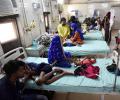
The sudden spike in cases of fever in India has claimed over 100 lives in five states, including UP, MP, Bihar, Haryana, and West Bengal. In UP, Firozabad and Mathura alone have reported 72 cases.

The company said that while the first quarter numbers were at the pre-pandemic levels, it saw a growth of 34 per cent in sales compared to the April to June period of 2020.

Eighteen months after the government started banning Chinese mobile apps, two distinct changes have occurred in the country's mobile app sweepstakes. The move has given a thrust to domestic app publishers, especially in certain segments and it has dramatically reduced the market share of Chinese apps. What started as an interim government ban on 59 Chinese apps, including the highly popular TikTok and WeChat in March 2020 ended as a permanent ban on many of them in January this year. According to a China Internet Report 2021 (by South China Morning Post), the market share of Chinese apps in India has dropped substantially from 44 per cent in 2018 to only 29 per cent in 2020. In 2017 it was 41 per cent.

From powering mobile devices, US chip designer Qualcomm has tied up with Ola Electric to power its electric scooters. Qualcomm is providing the key 4G connected octa core android platform which provides connectivity, computing capabilities and enables rich immersive displays with power saving software.

When Amit Jatia, vice-chairman of Westlife Development (WLDL), which operates fast-food chain McDonald's in West and South India, wanted to become the American fast-food giant's local partner in 1995, he had to first convince his family he would remain a staunch vegetarian. As McDonald's - home of the iconic Big Mac - completes 25 years in India, being one of the largest operators in the quick-service restaurant (QSR) segment in the country with over 300 outlets, Jatia has held on to the promise he made to his family. Not one to sit back and watch anyone flip the Big Mac, he gets straight to the meat of the matter when he says McDonald's success menu will see the QSR expand its ever-hungry 'foodprint' by doubling the number of joints and increasing its average unit volume by 35-40 per cent in five years.

Palo Alto-based electric carmaker Tesla has initiated talks with the government on the modalities of setting up fully-owned retail outlets. The company needs to comply with the foreign direct investment (FDI) guidelines related to single-brand retail, including local sourcing norms, to sell directly in India. At least two other foreign majors - Apple and Ikea - were engaged in talks with the government long before the sourcing norms were eased under the single-brand retail route.
When, recently, Bharti Airtel announced a Rs 21,000 crore rights issue, analysts pointed out that its structure was similar to that of Reliance's issue in June 2020. One similarity is that shareholders in both companies have to pay only 25 per cent of the money on application. The rest is to be paid in two tranches. In Bharti Airtel's case, it is within 36 months; in Reliance Jio's, it is within 17 months.
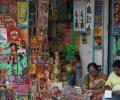
Enter the fireworks city of Sivakasi in Tamil Nadu and you can smell a familiar mix of sulphur, potassium nitrate, aluminium and carbon - familiar because if you've ever burst crackers, say on Diwali or Onam, chances are they were made here. Almost every household used to contribute to India's festive joy by contributing almost 90 per cent of the fireworks made in the country. Before the pandemic, around 300,000 people worked in the industry directly and another 500,000 indirectly. Located 540 kilometres from Chennai, Sivakasi is famous for its fireworks and crackers, along with printing and matches, but is almost a ghost town these days.

In a major push towards 'Make in India', Apple Inc is manufacturing 70 per cent of the mobile phones, in value terms, that it sells in the domestic market, in India, according to sources aware of the development. This is a sharp rise from the figure of 30 per cent just two years ago and marks a major shift in Apple's strategy following the government's Production Linked Incentive (PLI) scheme that kicked off in FY'21. One of Apple's three vendors here, Foxconn, is currently manufacturing the best-selling model, the Apple 11, along with the Apple 10 and the Apple 12. Another contract manufacturer, Wistron, makes the Apple SE 2020. (The third, Pegatron, has yet to start production). The only models that are imported (they have limited volumes but high value) are the Apple 12 Pro and Pro Max.
 © 2026 Rediff.com - Advertise with us - Disclaimer - Privacy Policy - Sitemap - Feedback - About us - Terms of use - Grievances